
What the new toolkit contains
The UK Health Security Agency has published a UK wide toolkit intended to help organisations identify and address health inequalities connected with antimicrobial resistance. It was developed with partners across England, Scotland, Wales and Northern Ireland under the national action plan for antimicrobial resistance from 2024 to 2029. The toolkit gathers existing material rather than announcing a new clinical guideline, prescribing target or surveillance system. Its immediate value is navigational. It gives teams a structured route into evidence and practical resources that have previously sat across many organisations and subject areas.1, 2
UKHSA says the collection signposts 86 resources in three broad sections. One covers data sources, dashboards and reports. A second groups practical resources by population or inequality characteristic. A third presents shared learning and case studies. The accompanying descriptions include features such as resource type, year, geographical coverage and whether a login is required. These details can reduce the time needed to find a plausible starting point, particularly for a team that knows its local problem but does not yet know which national dataset or improvement tool may fit.1, 2
The work delivers a specific commitment in the national action plan. Commitment 8.2 called for cost effective and evidence based resources that could be adapted to local needs across five connected areas. These are access, infection incidence, clinical outcomes, vaccine uptake and antimicrobial exposure. The commitment also required interventions to address rather than exacerbate health inequalities. That final requirement is not a minor safeguard. It means a stewardship project cannot be judged only by a lower prescribing rate if the change also makes timely treatment harder for a population already facing poor access.1, 2
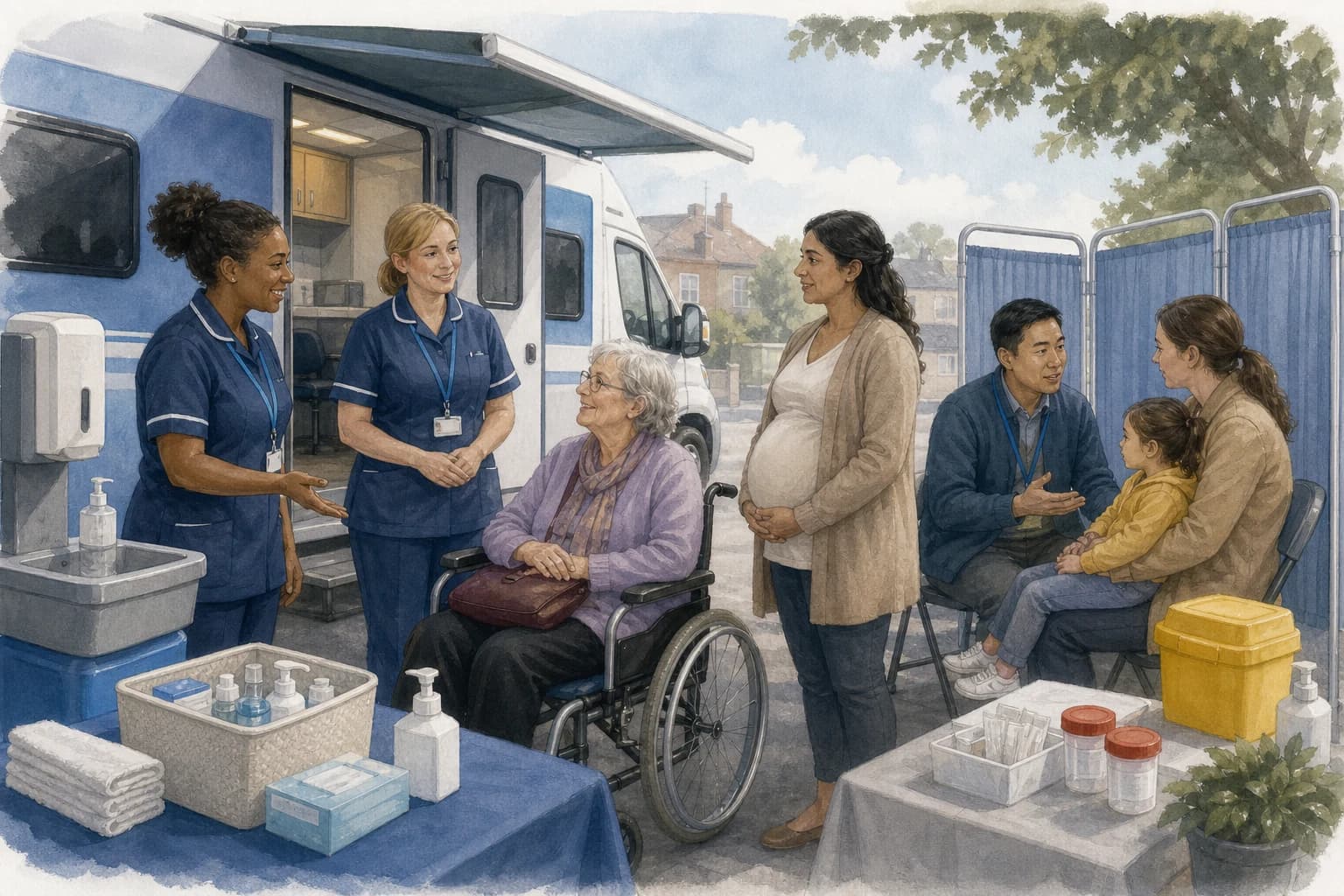
For nursing teams, the scope is wider than antibiotic administration. Infection prevention nurses, antimicrobial stewardship nurses, specialist pharmacists, community nurses, health visitors, midwives, care home teams and ward leaders all encounter parts of the pathway. They can influence access to assessment, sampling, vaccination, medicine information, adherence, escalation and follow up. The toolkit does not assign these roles or replace local governance. It helps a multidisciplinary team connect an inequality question with material that may support investigation, design or evaluation.1, 2
Why inequality belongs in antimicrobial resistance work
Antimicrobial resistance is often described through organisms, laboratory susceptibility and prescribing totals. Those measures are essential, but they can conceal who becomes infected, who receives appropriate treatment, who is exposed to antimicrobials and who experiences a poor outcome. The national action plan's inequality outcome aims to improve information about where the burden is greatest so that future action can be targeted. This is a distributional question as well as a national trend. An average can improve while a group with greater exposure or weaker access experiences little benefit.2, 1, 5
Several routes can produce an unequal burden without sharing a single cause. Crowded living conditions may increase opportunities for infection. Barriers to primary care can delay assessment and make later treatment more complex. Communication needs can limit understanding of when antibiotics are useful or how they should be taken. People in secure settings, temporary accommodation or unstable work may find follow up difficult. Clinical vulnerability can increase contact with health services and antimicrobial exposure. These are possible mechanisms that require local evidence, not labels that should be applied automatically to every person in a population group.2, 1, 5
The toolkit's shared learning section illustrates the breadth of the question. It includes work on stewardship in health and justice settings, vaccination outreach for people experiencing homelessness, and co-production with Roma communities in West Yorkshire. It also signposts observational research on deprivation and prescribing as well as public understanding of antibiotics. Listing these examples together makes a useful point. Inequality work may involve prevention, service access, communication, prescribing practice or continuity, and the suitable intervention depends on the mechanism demonstrated in the local setting.2, 1, 5
Nurses can help keep that mechanism visible. A high rate of antimicrobial use may reflect avoidable prescribing, but it may also reflect a high infection burden, a clinically vulnerable population or better detection. A low rate may indicate careful stewardship, but it may also signal poor access to care. The same caution applies to resistant infections and vaccine uptake. Before a team chooses an intervention, it needs to know whether the observed gap concerns need, exposure, access, decision making, treatment, outcome or measurement. Otherwise an apparently equitable response can miss the actual disadvantage.2, 1, 5
How to navigate the collection
A sensible first step is to state the local question in terms that can be measured. A team might ask whether people in a particular area experience more resistant bloodstream infections, whether residents of a care setting have more antimicrobial courses, or whether language need affects access to vaccination and early assessment. The data section then offers national, regional and local sources with descriptors covering geography, update frequency and access. Examples include annual surveillance reports, local antimicrobial resistance indicators, prescribing analytics and wider inequality tools. No single source covers every nation, setting and population.3, 4, 1
The geographical label deserves close attention. Some resources are UK wide, while others relate only to England, Scotland, Wales or Northern Ireland. A dashboard described as national may still mean national within one UK nation. Update schedules range from daily to annual or ad hoc, and several tools require organisational access. Data that are current and available to one integrated care system may not be reproducible elsewhere. A reader should check the actual coverage, denominator, release date and definitions in the linked source rather than relying only on the toolkit summary.3, 4, 1
The resources section provides another entry point by grouping material under population and inequality headings. These include age, deprivation, disability, ethnicity, geography, pregnancy and maternity, homelessness, people in contact with the criminal justice system, and several underserved groups. The category counts should not be added together as a total of unique resources because an item can be relevant to more than one group. A category is a search aid, not evidence that everyone within it has the same need or that a listed intervention has been evaluated for that population.3, 4, 1
Teams should also look beyond the heading that first appears to fit. A maternity service examining antimicrobial information may find useful material under health literacy, migration, disability or general inequality assessment as well as pregnancy and maternity. A community nursing project may need prescribing data, vaccination resources and a co-production example. Intersection is often where the practical barrier sits. The toolkit can help users move across these areas, but local involvement is needed to identify which combinations describe real experience rather than an assumption made from routine data alone.3, 4, 1
The quality assurance warning is central
UKHSA gives an unusually direct disclaimer. The collected resources have not been independently reviewed or quality assured by UKHSA or the partner organisations, and inclusion does not constitute endorsement. Users are responsible for assessing suitability, accuracy and applicability before use. They must also ensure that applying a resource within a programme or project is appropriate and does not inadvertently worsen health inequalities. This warning should travel with any local briefing about the toolkit. Removing it would turn a curated directory into something it does not claim to be.1, 3, 4
A clear description and a recent year are useful filters, but neither establishes quality. Before adoption, a team should open the original item and identify its author, purpose, methods, intended audience, publication date and review status. For data, it should check the case definition, denominator, missingness, geographical coverage and any changes over time. For an intervention, it should look for information on participation, comparison, outcomes, harms and transferability. A case study can generate an idea without proving that the same approach will work in another service.1, 3, 4
Clinical content needs the usual governance. A link in the toolkit does not override national guidance, a medicine's authorised information, local antimicrobial policy or specialist advice. Where a resource discusses treatment, prophylaxis, pregnancy, allergy or dose, it should be checked through the relevant clinical approval route before being used with patients or staff. Educational material also needs review for language, accessibility and cultural assumptions. A technically correct leaflet can still fail if the intended audience cannot access it, does not recognise its setting, or cannot act on its advice.1, 3, 4
The same discipline applies to tools that look familiar. A generic health equity assessment framework may be robust for structuring questions but contain no antimicrobial evidence. A prescribing dashboard may have excellent coverage but lack variables needed to examine a particular inequality. A campaign asset may have been evaluated for awareness rather than infection or prescribing outcomes. The correct response is not to reject the collection. It is to record what each item can support, what it cannot establish and which further evidence or approval is required.1, 3, 4
From a resource to a safe local intervention
A local project should begin with a defined inequality and an affected population, not with a favoured tool. Routine data may reveal a difference, but staff and community experience can explain how it arises. Nurses are often well placed to join these views because they see the practical sequence from access and assessment through treatment and follow up. The team should involve people affected by the service early enough to change the problem definition, the intervention and the measures, rather than asking them to approve a finished plan.1, 3, 5, 2
The baseline should include more than the headline outcome. If a service wants to reduce unnecessary antimicrobial exposure, it can measure access to same day assessment, sampling where appropriate, review of results, documented indication, duration, safety netting and return with deterioration. Measures should be selected for the setting and approved policy. They can then be examined across relevant groups where data quality and numbers allow. This helps distinguish safer prescribing from a fall produced by delayed care or missing documentation.1, 3, 5, 2
Design choices should be tested for unequal burden. Digital booking may be convenient for many people but exclude those without stable access or confidence online. Written information may be unusable for people who need translation, easy read material or a different format. Requiring repeat attendance can disadvantage people with insecure work, caring responsibilities, limited transport or restricted movement. An outreach model can improve access but still fail if records do not reach the usual clinical system. Equality assessment should consider these practical effects before full implementation and again after launch.1, 3, 5, 2
Evaluation needs a balancing measure. Alongside antimicrobial use, teams can monitor infection related reattendance, unplanned admission, delayed treatment and patient understanding. Alongside vaccination uptake, they can examine whether offers were informed and whether access improved across groups. Alongside a campaign's reach, they can check whether people know when and how to seek care. Small numbers may require qualitative feedback or aggregated reporting rather than unstable percentages. The aim is not to produce a perfect local causal study, but to make harmful or unequal consequences visible soon enough to respond.1, 3, 5, 2
Documentation is part of safety. A project record should state which toolkit resource was used, the version and date accessed, the appraisal completed, the local adaptation made and the people involved. It should identify the clinical or governance owner and a review date. If evidence is weak, that uncertainty should appear in the decision record and communication. This creates a route to revise or stop an intervention when data change, rather than allowing an external link to become an unexamined permanent policy.1, 3, 5, 2
What nursing leaders should ask next
The toolkit is a useful first release because it joins a national policy commitment to material that services can actually inspect. Its value will depend on maintenance. Links will move, dashboards will change definitions, guidance will be updated and case studies will acquire or fail to acquire stronger evaluation. Future versions would be more useful if users could see a clear review date, change history and status for every entry. A distinction between descriptive evidence, tested intervention, implementation aid and clinical guidance would also make initial appraisal faster.1, 2, 5
Users should feed back gaps rather than treating the list as complete. UKHSA invites suggestions for additional resources and continuing collaboration. Nursing teams can identify populations, settings and practical questions that are poorly represented, including care delivered across organisational boundaries. They can also submit learning that reports unsuccessful approaches and adaptations, not only polished success stories. Negative and mixed findings are especially valuable in inequality work because they show where a plausible intervention created a barrier or shifted disadvantage elsewhere.1, 2, 5
National bodies should continue to improve inequality analysis in antimicrobial surveillance. Consistent national totals remain essential, but useful local action needs measures that can describe distribution without compromising confidentiality or producing misleading small group comparisons. The four UK nations have different systems and data availability, so common purpose does not require identical dashboards. It does require transparent definitions, known gaps and enough compatibility to learn across borders. The toolkit can signpost that work, but it cannot repair missing or incomparable data on its own.1, 2, 5
For nursing leaders, the immediate question is modest. Does the collection help a team define and investigate one important local inequality more clearly than before? If it does, the next steps are appraisal, community involvement, governance and evaluation. The presence of 86 resources is not a quality score, and the national action plan label is not an endorsement of each item. Used within those limits, the toolkit can widen antimicrobial resistance work from an average prescribing target to a safer examination of who receives prevention, timely care and effective treatment.1, 2, 5

Comments
Loading published comments
Preparing the comment form